Blog›Coaching
How to Build Confidence in Public Speaking Without Fear

José Luis Martínez Moreno
Wellness Content Writer & Editorial Specialist
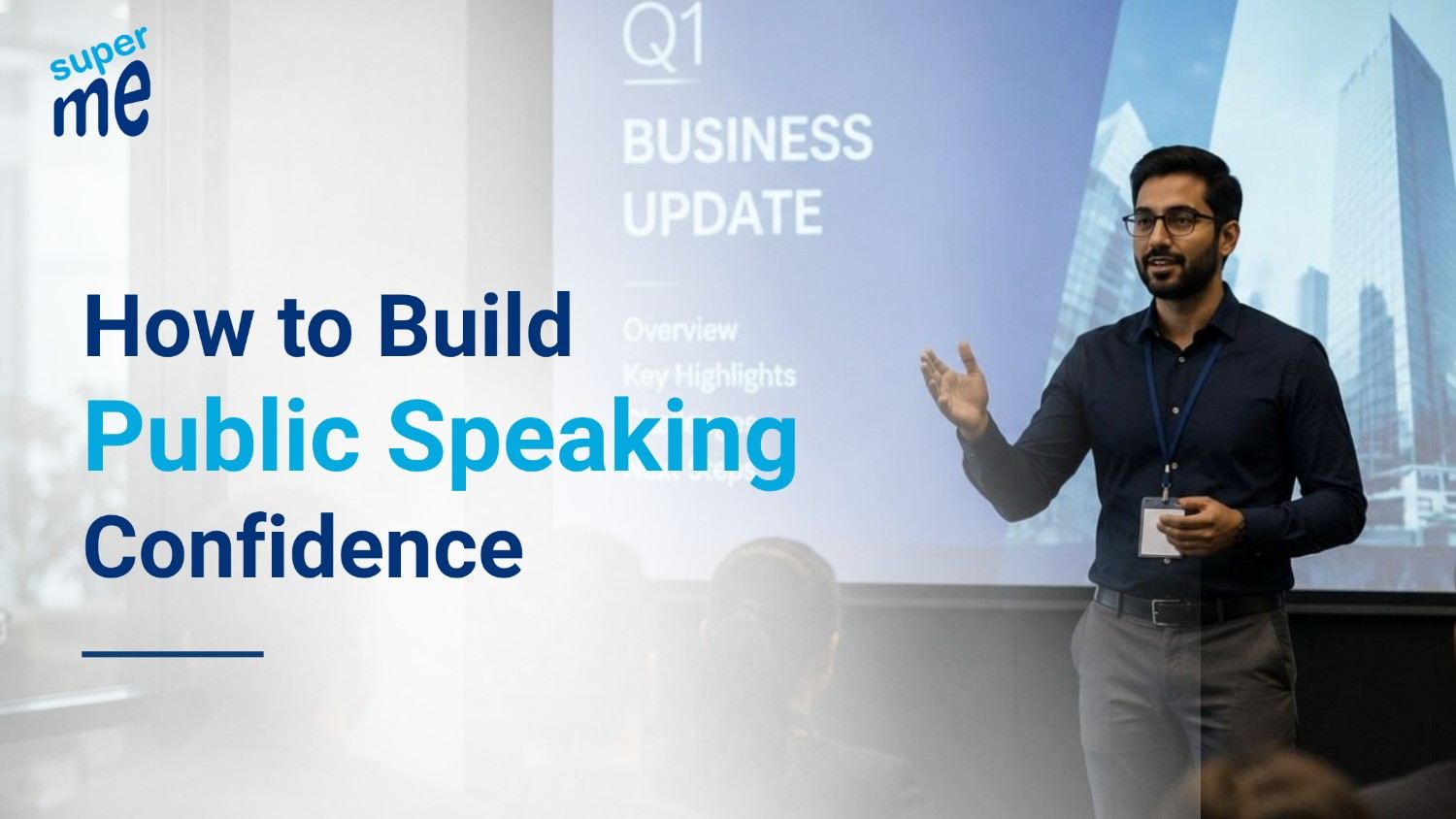
Public speaking confidence is not something you're born with. It's a skill - and like any skill, it builds with the right habits, the right mindset, and a little self-compassion. Whether you freeze up in meetings, dread presentations at work, or struggle to speak up in a group, this guide is for you.
You'll learn how to build self-confidence in public speaking step by step: from understanding where your fear comes from, to practical strategies you can use every day to become a calmer, clearer, more consistent communicator.
No gimmicks. No 'just believe in yourself' advice. Just honest, actionable steps that work.
Why Is Public Speaking So Hard? (And Why That's Completely Normal)
Most people rank public speaking as their number one fear - above flying, heights, and even death. That's not weakness. It's biology.
When you stand in front of an audience, your brain activates the same fight-or-flight response it would for a physical threat. Your heart races, your palms sweat, your voice shakes. This is not a sign that you can't do it. It's a sign that your nervous system is doing its job.
The good news: that same nervous energy, when understood and redirected, becomes fuel. The goal isn't to eliminate nervousness. It's to learn to speak through it.
Self-Acceptance: The Foundation of Genuine Public Speaking Confidence
Here's something most public speaking guides skip: you can't build lasting confidence on a shaky self-image. If you're going into every presentation trying to sound perfect, impress everyone, or hide your nerves - you'll exhaust yourself before you've said a word.
Self-acceptance means showing up as you are, not as you think you should be. It means:
• Accepting that nerves are part of the process, not a problem to fix
• Letting go of the idea that one stumble defines your ability
• Recognising that authenticity connects with audiences far more than polish
The most compelling speakers aren't the most technically perfect ones. They're the ones who speak with honesty and presence. That starts with accepting yourself - including the parts that feel uncertain.
How to Build Self-Confidence in Public Speaking: A Step-by-Step Approach
Building public speaking confidence isn't one big leap. It's a series of small, deliberate actions that compound over time. Here's where to start:
Step 1. Start smaller than you think you need to
Don't wait for the big presentation to practice confidence. Start in low-stakes moments: contribute one idea in a team meeting, introduce yourself in a group setting, speak up in a conversation when you'd normally stay quiet. Each small act of speaking trains your nervous system that it's safe.
Step 2. Prepare your structure, not a script
Word-for-word memorisation creates rigid, anxious speakers. Instead, know your three main points and the logic connecting them. If you can explain your topic to a friend over coffee, you can speak about it in front of an audience. Preparation reduces uncertainty - and uncertainty is the main driver of speaking anxiety.
Step 3. Record yourself
It feels awkward at first. Do it anyway. Recording yourself speaking - even on your phone - is one of the highest-impact improving public speaking skills habits you can build. You'll quickly notice your filler words, your pace, your posture. More importantly, you'll usually realise you come across far better than you thought.
Step 4. Use your body deliberately
Body language makes up a significant part of how your message is received. Stand with your feet grounded and your shoulders open. Make natural eye contact - not a stare, not a scan, but genuine moments of connection with individuals in the audience. Slow down your gestures. Breathe before you speak.
Improving Your Public Speaking Skills: The Habits That Actually Stick
Most people try to 'get better at public speaking' by waiting for opportunities and then suffering through them. That approach is slow and stressful. These habit-building strategies work better:
Practice out loud, daily
Even five minutes a day of speaking out loud - explaining something you know, reading an article aloud, summarising a podcast - trains your voice, your clarity, and your comfort with the sound of your own speaking. Saying things in your head is not the same. Your brain needs the real thing.
Seek feedback you can use
Ask a trusted friend, colleague, or coach one specific question: 'What was the clearest part of what I said? What was least clear?' Vague feedback ('it was great!') doesn't help you grow. Specific feedback does.
Join a speaking community
Groups like Toastmasters International exist for exactly this purpose - a low-stakes, supportive environment to practice regularly, get structured feedback, and gradually expand your comfort zone. Regular exposure beats isolated performance every time.
Reframe the nerves
Research on reappraisal shows that telling yourself 'I'm excited' instead of 'I'm nervous' can measurably improve performance. Anxiety and excitement feel nearly identical in the body. The story you tell yourself about those sensations shapes how you perform.
How to Stay Motivated When Progress Feels Slow
Building public speaking confidence is not linear. You'll have a great session, then a rough one. You'll speak well in a small meeting and then go blank in front of ten people. This is normal - and it's not regression. It's part of how skills actually develop.
To stay motivated:
• Track what you do, not how you feel. Keep a simple log: Spoke up in today's meeting. Asked a question at the seminar.' Seeing consistent action over time is more motivating than relying on how confident you felt in the moment.
• Set process goals, not outcome goals. 'I will practice speaking out loud for five minutes every weekday' is a goal you control. 'I will be confident in my next presentation' is not. Focus on what you can do consistently.
• Celebrate effort over results. You tried something uncomfortable. That counts. Every uncomfortable speaking moment is a deposit into your confidence account, whether it went perfectly or not.
• Find a reference point. Think of a speaking moment - however small - where you felt okay. That version of you exists. You've already accessed it once. You can access it again.
How to Stay Consistent: Building a Long-Term Practice
Confidence in public speaking isn't built in one training or one breakthrough moment. It's built through consistency - small, repeated exposures to speaking situations that gradually expand your comfort zone.
Here's a simple weekly framework to stay consistent:
1. Monday: Speak out loud for 5 minutes (explain something you know - a hobby, a news story, a concept from work).
2. Wednesday: Watch one speaker you admire for 10 minutes. Notice one specific thing they do well and try it yourself.
3. Friday: Reflect. What speaking moments happened this week? What felt easier than before? Write it down in two sentences.
This takes less than 20 minutes a week. Over three months, the compound effect is significant.
Want to Go Further? The MySuperMe Approach
At MySuperMe, we believe that public speaking confidence is deeply connected to self-awareness, self-acceptance, and how you show up in the world beyond the stage. The way you speak in public is often a reflection of how you feel about yourself in private.
Our coaching programmes help you work on both:
• Understanding the beliefs and habits that are holding you back from speaking up
• Building a consistent practice - not just in presentations, but in everyday communication
• Developing the kind of inner confidence that shows up whether you're in front of two people or two hundred
Key Takeaways
• Public speaking confidence is a skill you build - not a trait you either have or don't.
• Self-acceptance is the foundation: confidence built on performance anxiety doesn't last.
• Start small, practice out loud daily, and record yourself. These three habits move the needle most.
• Reframe nerves as fuel, not failure. Your body is preparing you to perform.
• Consistency beats intensity. Twenty minutes a week, every week, changes more than one intense workshop.
• Track your actions, not your feelings. Showing up is the measure of progress.
Frequently Asked Questions
José Luis Martínez Moreno
Wellness Content Writer & Editorial Specialist
José Luis Martínez Moreno is an editorial writer and content specialist with over 25 years of experience in journalism, research, and digital content creation. He creates well-researched, SEO-focused content across wellness, lifestyle, and personal growth topics, combining editorial expertise with audience-focused storytelling.
LinkedIn →